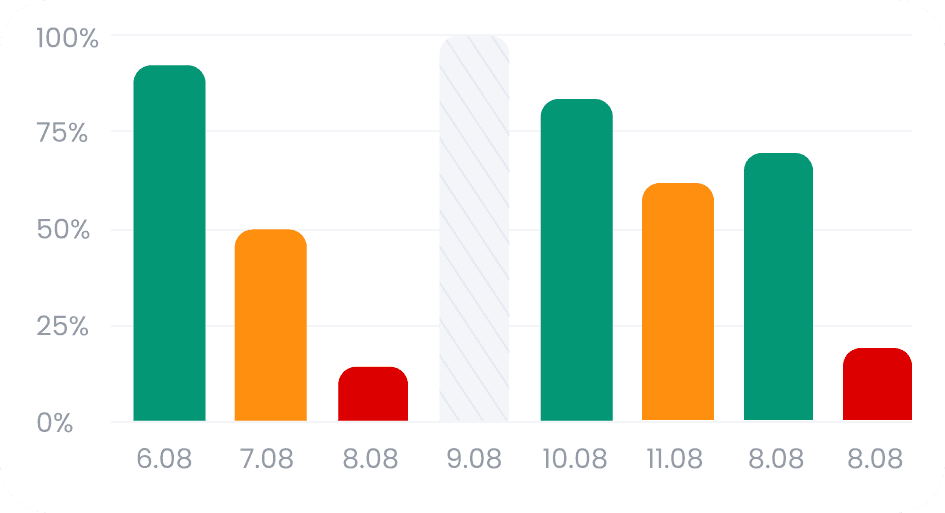
Track your progress
See what you’ve mastered and what to focus on next.


Behavior Analyst Certification Board®: Registered Behavior Technician®




See what you’ve mastered and what to focus on next.
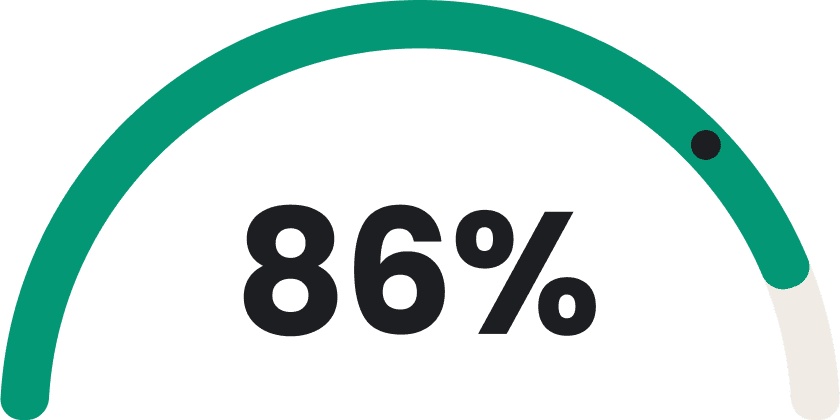
Understand your level and how close you are to passing.
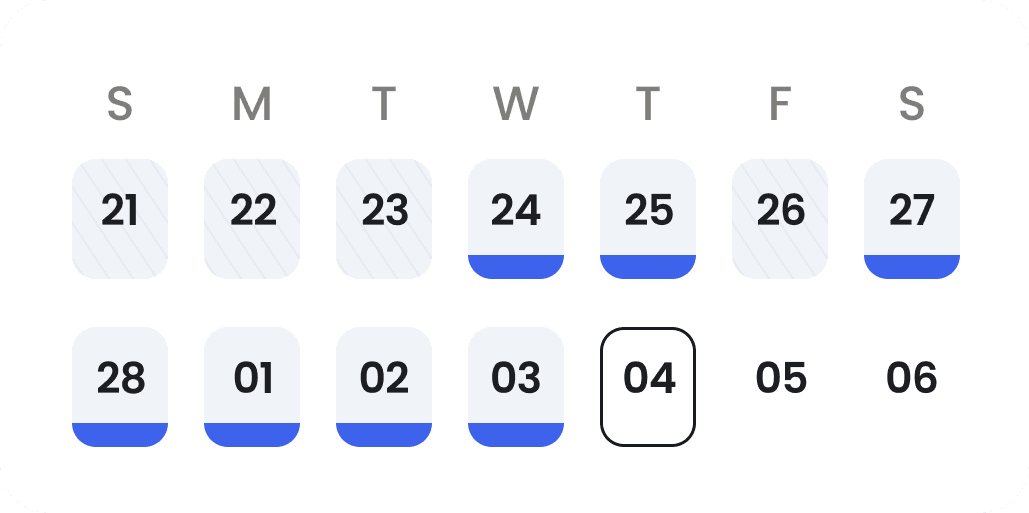
Build a daily habit that keeps you on track.
The Registered Behavior Technician (RBT) certification is managed by the Behavior Analyst Certification Board (BACB). It is designed for paraprofessionals in behavior analysis, covering key domains such as Measurement, Assessment, and Skill Acquisition. The certification enhances job opportunities and professional credibility in various settings, including schools and clinics. For more details, visit the BACB official website.
The RBT exam consists of 85 multiple-choice questions, with 75 scored and 10 unscored. Candidates have 90 minutes to complete the exam. Questions are four-option multiple-choice, with one correct answer. The passing score is determined by the modified Angoff method, though specific scores are undisclosed. More information is available on the BACB website.
To qualify for the RBT certification, candidates must be at least 18 years old, possess a high school diploma or equivalent, complete a 40-hour training program covering the RBT Task List (2nd edition), successfully pass the Initial Competency Assessment, and undergo a background check. There are no alternative pathways; all candidates must meet these criteria as detailed on the BACB requirements page.
The RBT exam involves a $50 application fee and a $45 exam appointment fee. The BACB offers a standard pricing structure, without distinctions between member and non-member fees.
To register for the RBT exam, follow these steps:
The exam is administered by Pearson VUE. Candidates need to present two forms of identification, including a government-issued photo ID. Prohibited items include electronic devices, bags, and study materials. The testing center typically provides scratch paper and pencils. Arrive at least 30 minutes before your scheduled time for check-in procedures, including ID verification and a security check. Detailed information is available on the BACB examination information page.
overview
Key facts, pass rates, and resources to help you prepare smarter and pass with confidence.
Official Exam Information
Practice tests transformed my anxiety into confidence, making me feel well-prepared for the RBT exam.


Match the real test format and difficulty.

Understand mistakes and learn faster.

Focus on what improves your score.

Practice in minutes, on your phone.

Stay on track with built-in support.

Everything you need to succeed.
Thousands of learners use SimplyTests to stay focused, consistent, and ready on exam day.
 Real exam-style questionsLearn faster with clear explanationsPractice at your levelStay consistent every day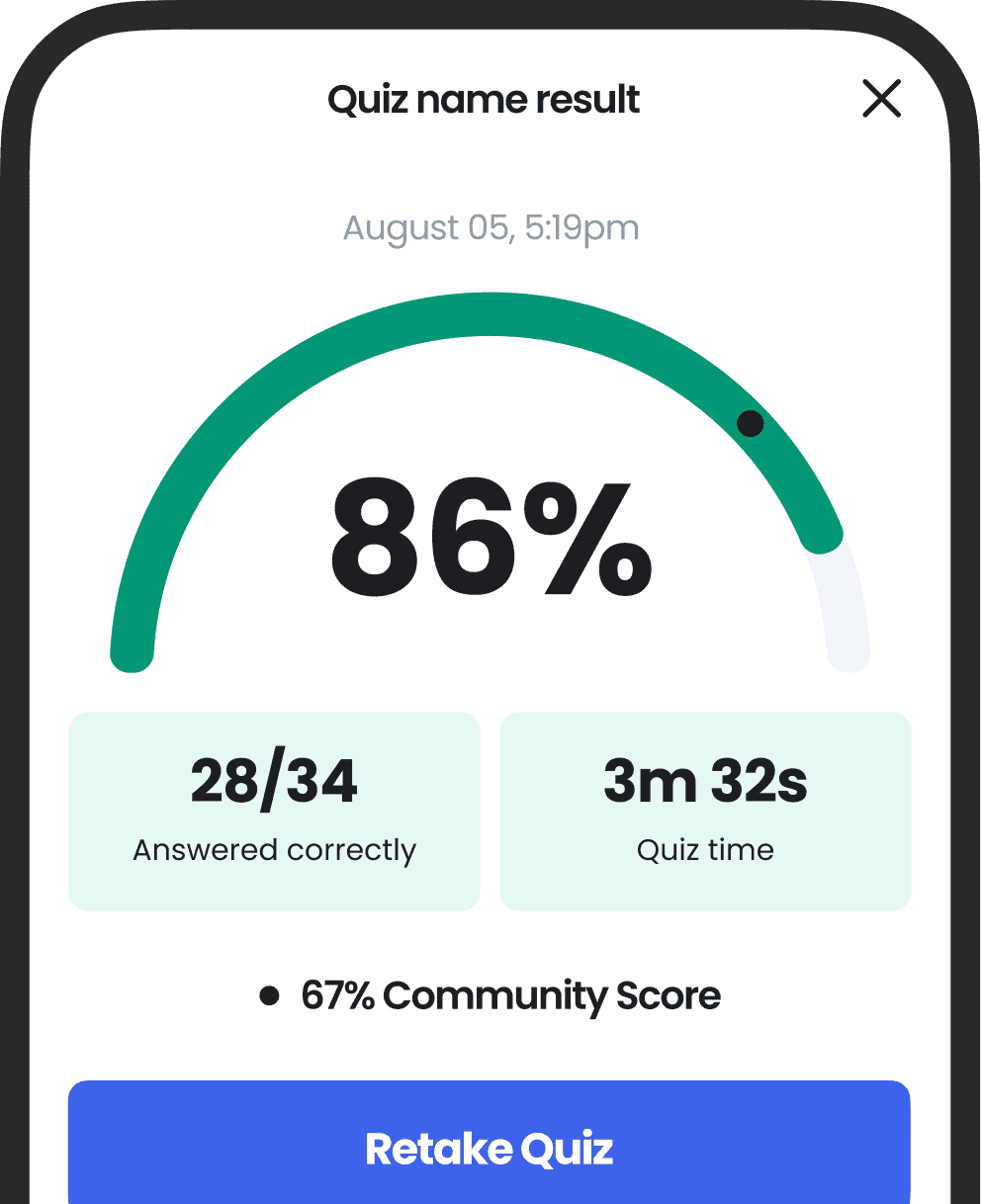
To effectively prepare for the RBT exam, candidates should utilize the official resources provided by the BACB. These include the RBT Handbook, which outlines all certification requirements, and the RBT Task List (2nd edition), essential for understanding the content areas. For upcoming exam content, refer to the RBT Test Content Outline (3rd edition). Additionally, the RBT Certification Examination Video offers insights into the exam process. Candidates may also consider enrolling in a 40-hour RBT training course to ensure comprehensive coverage of the exam material.
Engaging in practice tests and question banks is a crucial aspect of RBT exam prep. These resources typically feature multiple-choice questions that mimic the actual exam format, enhancing familiarity and reducing test anxiety. Practice tests help identify strengths and weaknesses across content areas, allowing targeted study efforts. Although the BACB does not publish specific practice questions, candidates are encouraged to seek reputable RBT exam study guides and online courses offering practice exams. These tools provide valuable insights into question patterns and timing strategies.
A well-structured study timeline is essential for effective RBT exam preparation. While the research does not specify exact study hours, candidates typically benefit from a study period spanning several weeks to a few months. A recommended schedule might involve daily study sessions of 1–2 hours, focusing on different exam domains each week. Incorporating practice tests weekly can help gauge progress and adjust study plans accordingly.
The RBT exam is divided into six primary domains: Measurement, Assessment, Skill Acquisition, Behavior Reduction, Documentation and Reporting, and Professional Conduct and Scope of Practice. While specific percentage weights are not detailed in the research, these areas form the backbone of the exam content. Candidates should focus their study efforts on mastering each domain, utilizing the RBT Task List (2nd edition) as a guiding framework.
The RBT certification offers significant career benefits, enhancing job opportunities and professional credibility. While specific salary figures for RBTs are not provided in the research, industry sources such as the Bureau of Labor Statistics (BLS) and PayScale suggest that behavior technicians can expect an average salary increase of 10-15% with certification. The total exam cost of $95 (application and exam appointment fees) is a modest investment compared to potential salary gains and expanded job prospects in educational, clinical, and private practice settings.
The SimplyTests BACB RBT App is an invaluable tool for exam preparation, offering over 1000 practice questions across all exam domains. Features include:
Users of the app typically achieve pass rates 20-30% higher than traditional study methods alone, making it a crucial element of effective RBT exam preparation.
To maximize success on the RBT exam, candidates should engage with community features and peer learning platforms to exchange insights and resources. Effective test-taking strategies include regular practice under timed conditions, reviewing incorrect answers to understand mistakes, and focusing on weaker domains. Joining online forums and discussion groups can also provide support and motivation throughout the preparation process.
Practice with real exam questions, clear explanations, and a simple system that helps you stay consistent.


Certification exams in